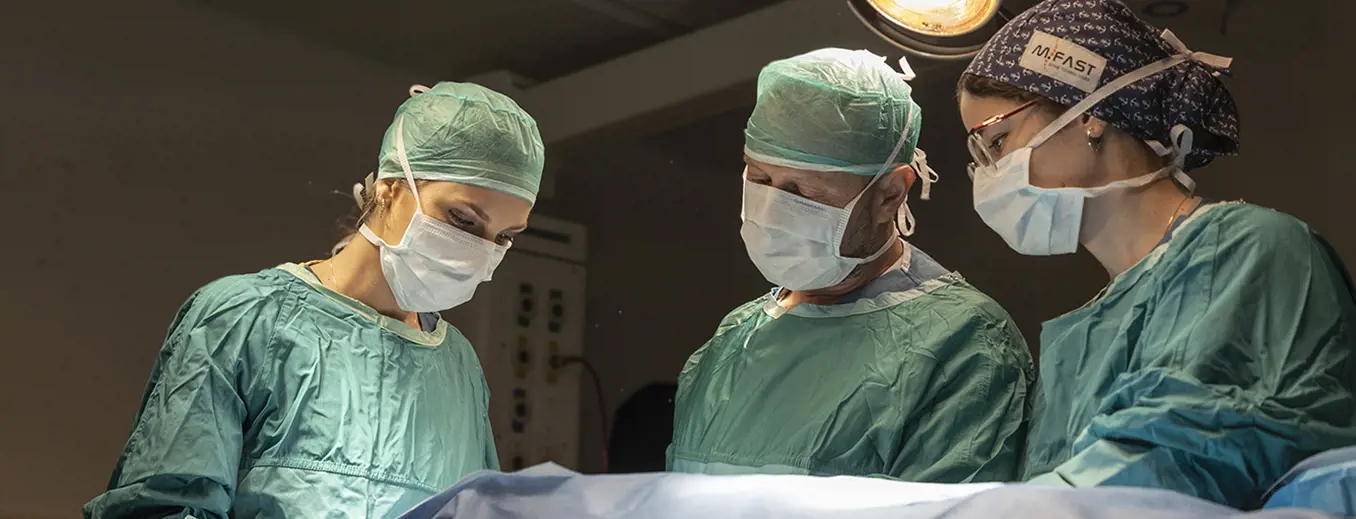
The Division of Surgery is nationally and internationally recognized for outstanding care across multiple specialties.
Team
The Surgical Division at Tel Aviv Sourasky Medical Center (Ichilov) is a central part of the Medical Center and the largest surgical division in Israel. It encompasses all departments and units involved in surgical care and related treatments. These include the Urology Department, Orthopedic Division, National Orthopedic Oncology Department, ENT and Head and Neck Surgery Division, Anesthesiology and Intensive Care, General Surgery Division, Vascular Surgery, Plastic, Reconstructive and Aesthetic Surgery Division, Neurosurgery Division, Cardiac Surgery Department, Thoracic Surgery Department, Ophthalmology Department, and Emergency Department.
In March 2024, Ichilov inaugurated Kissufim, a new surgical complex featuring ten advanced operating rooms, making it the hospital with the largest number of operating rooms in Israel. The new complex is expected to help reduce surgical waiting times nationwide.
Kissufim includes ten state-of-the-art ambulatory operating rooms equipped with advanced medical technologies. Whenever clinically appropriate, procedures are performed using regional anesthesia or nerve blocks rather than general anesthesia, allowing for faster recovery. Beyond its medical and technological innovations, the complex introduces a new approach to the patient and family experience. Designed as a welcoming, comfortable, hotel-like environment, it emphasizes personalized care and treats patients as individuals undergoing a medical procedure rather than as hospitalized patients.
Excellence in Patient-Centered Care
The Division promotes multidisciplinary, patient-centered care, with specialized teams providing diagnosis, consultation, surgical treatment, and follow-up care. Its departments and units cover the full range of advanced surgical specialties and procedures, including complex cancer surgery, brain and skull base surgery, thoracic and cardiac surgery, vascular surgery, organ transplantation, kidney and urinary tract surgery, head and neck surgery, orthopedic surgery, and complex plastic and reconstructive procedures such as breast reconstruction and oncoplastic surgery.
Additional specialized services include hepatopancreatobiliary (HPB) surgery involving the liver and pancreas, bariatric surgery and obesity treatment, melanoma surgery, surgical oncology, colorectal surgery and proctology, esophageal and gastric surgery, complex hernia surgery, and advanced endoscopic surgery.
The wide range of surgical specialties and the expertise of its medical teams have established TASMC as a leading surgical facility and major national referral center for patients with complex conditions. More than 60% of patients admitted for planned surgical procedures come from across Israel.
The Division provides comprehensive care, including diagnostic evaluation, non-surgical treatment of surgical conditions, preoperative preparation, elective and emergency surgery, and postoperative intensive care. Its departments work closely with other hospital services, providing specialized consultations, diagnosis, and treatment to ensure coordinated, multidisciplinary care.
Research and Education
The Surgical Division at Ichilov was the first in Israel to adopt a policy of subspecialization across all surgical disciplines. Its staff includes more than 20 professors and leading surgeons representing a broad range of surgical specialties, providing advanced care for patients with complex medical conditions.
All departments are affiliated with the Faculty of Medicine at Tel Aviv University (formerly the Sackler School of Medicine). The Division's medical teams are actively involved in clinical research, academic teaching, professional training, and a wide range of educational activities.
Improving Preoperative Care
Patients scheduled for elective (non-emergency) surgery undergo preoperative assessment and anesthesia evaluation at dedicated clinics before their procedure. Depending on the type of surgery and medical requirements, patients may be admitted to the surgical department the evening before surgery, on the morning of surgery, or arrive directly from home for their procedure.
Following surgery and the initial recovery period, further hospitalization and postoperative care are determined according to the surgeon's instructions and the patient's medical condition.