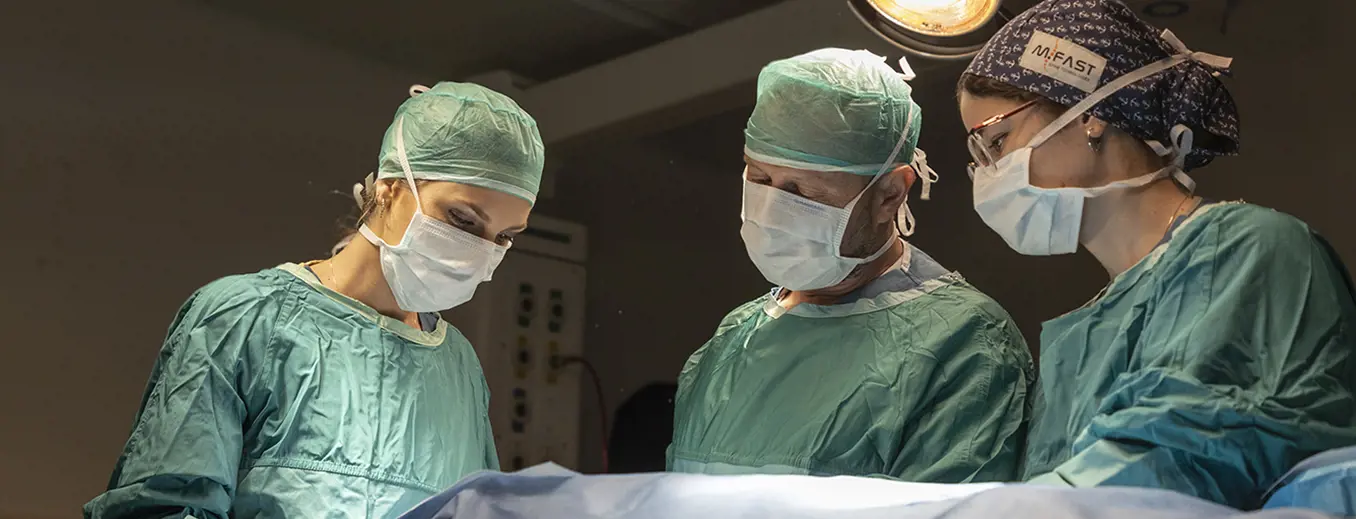
The Oral and Maxillofacial Surgery Department at Tel Aviv Sourasky Medical Center (Ichilov) is one of the largest departments of its kind in central Israel. It provides a comprehensive range of treatments for conditions affecting the face, jaws, and oral cavity, including facial and jaw trauma, correction of congenital and acquired facial deformities (orthognathic surgery), temporomandibular joint disorders, and obstructive salivary gland diseases, using both conventional and minimally invasive endoscopic techniques.
The Department also specializes in facial feminization surgery for transgender women, using some of the most advanced surgical techniques available in Israel. Additional services include treatment of jawbone diseases and tumors, removal of benign and malignant oral tumors and jaw cysts, dental implants, bone grafting, sinus lifts, and extraction of impacted teeth.
Each year, the Department performs approximately 500 procedures under general anesthesia, treats around 3,000 emergency cases, and provides outpatient care to approximately 11,000 patients.
Treatments are performed by leading specialists using advanced technologies, including low-dose CT imaging, computer-assisted surgical planning, 3D printing, minimally invasive surgery, and laser procedures.
The Department also operates a highly regarded residency training program and conducts extensive research in innovative areas of oral and maxillofacial surgery.
Clinics and Areas of Expertise
Reconstructive Jaw Surgery
The Oral and Maxillofacial Surgery Department at Tel Aviv Sourasky Medical Center (Ichilov) performs a wide range of surgical procedures to prepare patients for dental implant restorations carried out by dentists at the hospital’s dental clinic and community dental practices.
The Reconstructive Jaw Surgery Clinic provides three main types of procedures:
-
Soft Tissue Surgery: Procedures involving the oral mucosa, gums, and soft tissues to improve dental function and aesthetics.
-
Bone Grafting: Surgical reconstruction of missing jawbone tissue to enable dental implant placement following successful bone graft integration.
-
Dental Implant Placement: Placement of implants in the upper and lower jaws to allow subsequent dental restoration, restoring oral function, speech, and aesthetics.
Orthognathic Surgery
Orthognathic surgery is a specialized field of oral and maxillofacial surgery focused on correcting structural abnormalities of the facial bones that affect both function and appearance.
These deformities may result from genetic or congenital conditions or acquired factors such as trauma, infection, or tumors. Most commonly, they involve developmental abnormalities of the jaws, leading to facial asymmetry or malocclusion caused by excessive or insufficient jaw growth.
These conditions typically become apparent during early adolescence and may cause difficulties with chewing, speech, jaw joint function, and facial appearance. In addition to functional limitations, facial deformities may affect self-confidence, body image, and social well-being.
In some adults, underdevelopment of the lower jaw and chin may contribute to obstructive sleep apnea. In severe cases, surgical advancement of the lower jaw or both jaws may be recommended when patients cannot tolerate respiratory support devices.
Less commonly, severe facial and jaw deformities are associated with congenital or genetic syndromes, including cleft lip and palate, Apert syndrome, Crouzon syndrome, and Pierre Robin sequence.
Facial Feminization Surgery
Facial feminization surgery is an important component of gender-affirming care for transgender women. It includes a range of surgical procedures involving the face and neck, designed to modify traditionally masculine facial features and create a more feminine appearance.
The Facial Gender-Affirming Surgery Clinic at Ichilov provides comprehensive facial and neck feminization procedures. Treatment is coordinated with the ENT Department for tracheal shave (Adam’s apple reduction) and voice feminization surgery, and with the Plastic Surgery Department for nasal feminization procedures.
In addition to surgery, the clinic offers complementary non-surgical treatments, including dermal fillers for facial wrinkles and contouring of the chin, jawline, and nose, as well as botulinum toxin injections to reduce masseter muscle enlargement, improve smile symmetry, and soften forehead and crow’s feet wrinkles.
Maxillofacial Trauma
The treatment of facial and jaw trauma is a fundamental part of oral and maxillofacial surgery. Tel Aviv Sourasky Medical Center (Ichilov) is a major trauma center treating patients with multiple injuries, including facial bone fractures.
The Facial and Jaw Trauma Clinic treats hundreds of facial fracture cases each year, working closely with the Neurosurgery, ENT, Ophthalmology, and Plastic Surgery departments when necessary. The hospital is equipped with advanced imaging and fixation systems to support optimal treatment outcomes.
Facial fractures can have significant functional and aesthetic consequences, including difficulties with eating, chewing, and speaking, facial deformities, restricted eye movement, and pain.
Facial injuries occur across all age groups, from infancy to older adulthood. Common causes include motor vehicle, bicycle, and scooter accidents, physical violence, sports injuries, falls, and military-related injuries.
Multidisciplinary Clinic
The Jaw and Sinus Surgery Clinic at Ichilov is jointly operated by the ENT and Oral and Maxillofacial Surgery departments. It specializes in diagnosing and treating sinus conditions originating from dental and oral diseases.
Patients receive multidisciplinary evaluation and treatment recommendations from specialists in both fields.
The clinic's main areas of care include the diagnosis and treatment of chronic sinusitis caused by dental infections, management of dental treatment complications such as persistent connections between the oral cavity and sinus following tooth extraction or dental implants penetrating the sinus cavity, and consultations before sinus lift procedures when sinus abnormalities are detected.
The clinic also provides consultations for ENT specialists regarding findings associated with chronic sinus disease, including cysts, impacted teeth, and other abnormalities identified through imaging.
Saliva plays an essential role in oral health by lubricating the mouth, softening food, supporting chewing and swallowing, facilitating speech, and protecting teeth by removing food debris, acids, and bacteria.
There are two main types of saliva: serous saliva, which contains water, proteins, and the enzyme amylase that helps digest starch, and mucous saliva, which is thicker and helps lubricate food and maintain moisture in the mouth.
Salivary glands may be affected by various conditions, including viral and bacterial infections, autoimmune diseases such as Sjögren's syndrome, treatment-related damage, benign and malignant tumors, and obstructive disorders caused by stones, duct narrowing, or structural abnormalities.
Obstruction of a salivary gland may lead to infection, swelling, pain, and sometimes local or systemic fever.
The Obstructive Salivary Gland Disorders Clinic at Ichilov specializes in the advanced diagnosis and treatment of salivary duct obstructions and related conditions.
Human papillomavirus (HPV) affects both women and men and is not limited to the cervix. HPV-related head and neck cancers are approximately three times more common in men.
The HPV Center at Ichilov is a pioneering multidisciplinary center dedicated to the early detection, prevention, research, and treatment of benign, precancerous, and malignant HPV-related lesions.
The Center provides initial diagnosis and long-term monitoring of HPV carriers, using specialized diagnostic equipment and coordinating care across relevant medical specialties. Its activities also include treatment, research, vaccination awareness, education, and prevention.
Services include early detection examinations of the oral cavity, throat, and other HPV-associated anatomical sites; head and neck examinations; anoscopy; urological evaluation; long-term follow-up; preventive care; biopsies; and surgical removal of precancerous and malignant lesions.
The Center also treats benign HPV-related lesions, including condylomas and warts, using advanced technologies, and offers personalized treatment approaches, including innovative and investigational therapies for HPV-related cancers.
The Oral Medicine Unit is part of the Oral and Maxillofacial Surgery Department and the ENT Division at Tel Aviv Sourasky Medical Center.
The Unit operates several specialized clinics covering different areas of oral medicine, including the Oral Mucosal Diseases Clinic, Facial and Jaw Pain and Temporomandibular Joint Disorders Clinic, Dry Mouth and Salivary Gland Dysfunction Clinic, and Maxillofacial Imaging Service.
Additional services include dental treatment for patients with complex medical conditions, procedures performed under general anesthesia or sedation, and consultations for hospitalized patients and patients with chronic illnesses.
The Facial Rehabilitation Clinic at Ichilov specializes in maxillofacial rehabilitation following cancer surgery, accidents, war-related injuries, congenital abnormalities, and other conditions affecting the face and jaws.
Maxillofacial prosthetic rehabilitation is a subspecialty of prosthodontics focused on designing and fitting removable or fixed oral and facial prostheses.
These treatments aim to restore essential functions such as chewing, swallowing, drinking, and speaking, while also reconstructing facial structures involving the nose, ears, eyes, and other affected areas.