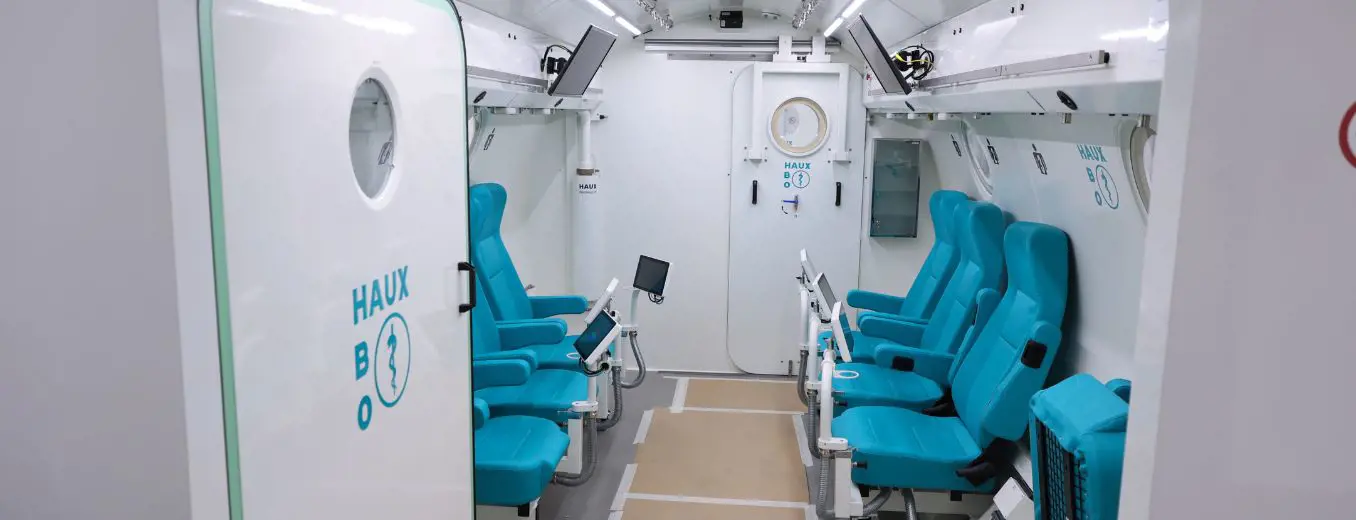
The Institute of Hyperbaric Medicine at Ichilov offers hyperbaric chamber treatment for a variety of medical conditions in an advanced, safe, and supervised medical setting. Licensed by the Ministry of Health and located in central Tel Aviv, Ichilov’s hyperbaric chamber provides hyperbaric oxygen therapy under the supervision of a professional team, with a treatment plan tailored to each patient’s medical condition.
A hyperbaric chamber, also known as a high-pressure oxygen chamber, is a medical facility in which atmospheric pressure can be controlled while the patient breathes oxygen at a high concentration. Under these conditions, oxygen availability to body tissues increases, which, in certain medical conditions, may support healing processes, tissue repair, reduction of edema, improvement of local blood flow, and recovery from various injuries.
Ichilov offers treatment programs for a wide range of medical conditions, including hard-to-heal wounds, radiation injuries, sudden hearing loss, bone infections, sports injuries, chronic pain, fibromyalgia, post-traumatic stress disorder (PTSD), and other medical conditions. Some treatments are covered by the national health basket, while others are not, depending on the medical diagnosis, accepted criteria, and professional assessment of treatment suitability.
Benefits of Hyperbaric Chamber Treatment at Ichilov
-
One of the most advanced hyperbaric chambers in the world, designed to provide the highest standards of treatment quality and safety.
-
Ichilov’s hyperbaric chamber is licensed by the Ministry of Health and reaches pressures of up to 3 atmospheres.
-
A full range of treatment programs: hard-to-heal wounds, radiation injuries, sudden hearing loss, physiological enhancement and sports injuries, chronic fatigue, chronic pain, fibromyalgia, various neurological conditions, PTSD, and more.
-
Special sports injury package: a dedicated treatment program for grade 1 muscle injuries and tears.
-
A comprehensive, personalized care and support program tailored to each patient by leading physicians in their respective fields.
-
Treatments both within and outside the national health basket, available to members of all health maintenance organizations (HMOs).
Clinical Experience, Expertise, and Scope of Activity
Since its opening in 2022, the Center for Hyperbaric Medicine at Ichilov University Medical Center has gained extensive clinical experience in treating a wide range of complex medical conditions and has become one of Israel’s leading referral centers in the field of hyperbaric medicine.
The center provides treatment to patients from across the country through a professional team with specialized expertise in hyperbaric chamber treatment and hyperbaric oxygen therapy. The combination of clinical experience, advanced technology, multidisciplinary collaboration, and evidence-based medicine enables us to provide each patient with personalized, professional, and safe treatment.
All this in the heart of Tel Aviv, at Ichilov, with high appointment availability!
Hyperbaric chamber treatment at Ichilov is provided within a leading hospital, with comprehensive medical support, a professional team, and experience in treating a wide range of medical conditions. Before starting treatment, a medical suitability assessment is required, including a review of medical documents, medical history, and the reason for referral, to ensure that the treatment is appropriate and safe for each patient. When considering hyperbaric chamber treatment, it is important to understand that this is a medical treatment tailored to a specific diagnosis, rather than a universal solution for every condition. Alongside the potential benefits of hyperbaric oxygen therapy, there are also considerations regarding treatment suitability, medical limitations, possible side effects, and costs, which vary according to the type of treatment, eligibility for coverage under the national health basket, or private treatment. Therefore, each inquiry is assessed individually by the institute’s team.
Conditions Treated with Hyperbaric Oxygen Therapy
Post-traumatic stress disorder (PTSD) is a complex disorder that develops following exposure to a traumatic event and may manifest as intrusive memories, hyperarousal, sleep disturbances, avoidance, and changes in mood and daily functioning. Alongside its psychological manifestations, research indicates changes in the function and connectivity of brain networks involved in emotional regulation, memory, and responses to threatening situations.
Hyperbaric oxygen therapy (HBOT) has been investigated in recent years as a complementary treatment for chronic PTSD, particularly in patients who have not achieved sufficient improvement with conventional treatments. Repeated exposure to oxygen under pressure may promote neuroplasticity, influence cerebral oxygenation and metabolism, and support functional changes in brain networks associated with emotional and cognitive regulation.
In accordance with Ichilov Medical Center’s protocol, treatment is intended for patients with chronic PTSD who have exhausted conventional treatment options. A referral from the treating psychiatrist is required, and continued psychotherapy and regular psychiatric follow-up throughout the course of treatment are strongly recommended and considered highly important.
Treatment takes place five days a week, with each session lasting approximately two hours. The neuroplasticity processes associated with the treatment develop over a series of repeated exposures, making adherence and consistent attendance throughout the course of treatment particularly important.
Fibromyalgia is a chronic pain syndrome characterized by widespread musculoskeletal pain, fatigue, sleep disturbances, and sometimes difficulties with concentration, memory, and cognitive processing speed – a phenomenon sometimes referred to as “Fibro Fog.” It is now widely accepted that some patients experience changes in the way the central nervous system processes and regulates pain, a process known as central sensitization.
Hyperbaric oxygen therapy has been investigated in recent years as a complementary treatment for fibromyalgia. The significant increase in oxygen availability to tissues may influence neuroplasticity, regulation of nervous system activity, inflammatory processes, and pain-processing mechanisms.
Clinical studies and meta-analyses have found that hyperbaric oxygen therapy may improve overall functioning, reduce the number of tender points and fatigue, and improve sleep quality and quality of life in some patients. However, the evidence is still evolving, and treatment responses vary among patients.
The effects of treatment are assessed over a series of repeated exposures, making adherence and consistent attendance important. Hyperbaric oxygen therapy does not replace conventional multidisciplinary treatment for fibromyalgia, which includes tailored physical activity, medication as needed, and management of sleep, pain, and functioning.
The Institute of Hyperbaric Medicine at Ichilov offers a unique treatment package for physiological enhancement, supported by a multidisciplinary medical team of physiologists, neurologists, and pain specialists, with the aim of maximizing the physical capabilities of individuals engaged in exercise and training.
As early as the 1980s, athletes in the United States used oxygen as a key to rapid recovery, but today’s hyperbaric chamber takes this approach a step further:
-
Improved physical fitness: Studies in Israel have shown that moderate-intensity exercise combined with hyperbaric oxygen therapy improves physical performance.
-
Healing of muscle injuries: Hyperbaric oxygen therapy promotes recovery from microscopic muscle tears.
-
Mitochondrial stimulation: Strengthening the cells’ “powerhouses” improves energy utilization.
In addition, reports indicate further benefits following hyperbaric oxygen therapy, including improved sleep quality, pain relief, mental clarity, improved mood, and accelerated overall recovery.
Hard-to-heal wounds are wounds that do not progress as expected through the healing process despite optimal treatment and may persist for weeks or even months. In suitable patients, hyperbaric oxygen therapy (HBOT) may serve as a complementary treatment within a multidisciplinary approach to wound care.
A hard-to-heal wound is generally defined as a wound that does not demonstrate sufficient healing progress over several weeks, despite appropriate conventional treatment. Complex wounds are particularly common among patients with diabetes, impaired blood supply to tissues, or tissue damage following radiation therapy.
The causes of delayed wound healing vary and include reduced blood and oxygen supply to tissues, infection, prolonged pressure on the wound area, edema, nutritional deficiencies, and various underlying medical conditions.
Oxygen plays a central role in tissue healing. Hyperbaric oxygen therapy significantly increases the amount of oxygen dissolved in the blood and its availability to tissues. Under appropriate conditions, this may support the formation of new blood vessels, immune cell activity, collagen production, and tissue repair processes.
The decision to provide hyperbaric oxygen therapy is based not solely on the presence of a chronic wound, but also on the type and severity of the wound, blood supply to the tissue, previous treatments, and the patient’s overall medical condition.
International guidelines emphasize that hyperbaric oxygen therapy is a complementary treatment rather than a substitute for conventional wound care, which includes management of underlying medical conditions, infection treatment, debridement, pressure relief, and assessment of blood supply to the tissue.
Suitability for hyperbaric oxygen therapy is assessed individually by the institute’s team following an evaluation of the wound, blood supply to the tissue, underlying medical conditions, relevant tests, and treatments provided to date.
The treatment significantly increases oxygen availability to oxygen-deprived tissues and supports the formation of new blood vessels, immune system activity, collagen production, and tissue repair processes. In selected diabetic ulcers, hyperbaric oxygen therapy has been found to potentially improve healing outcomes and reduce the risk of amputation when provided in addition to conventional treatment.
Osteomyelitis is an infection of bone tissue and bone marrow. In some cases, the infection becomes chronic and persists or recurs despite appropriate antibiotic treatment and surgical intervention. This condition is known as refractory chronic osteomyelitis.
In chronic bone infections, there may be areas with impaired blood and oxygen supply, compromising immune system function and the penetration of treatment into the tissue. Hyperbaric oxygen therapy significantly increases oxygen concentration in bone tissue, improves the antibacterial activity of white blood cells, promotes the formation of new blood vessels, and supports bone formation and healing processes. There is also evidence that high oxygen concentrations may enhance the effectiveness of certain antibiotics.
Hyperbaric oxygen therapy is administered as a complementary treatment and does not replace antibiotic treatment or surgical intervention. The best outcomes have been reported when hyperbaric oxygen therapy is combined with culture-directed antibiotic treatment and, when necessary, surgical debridement and removal of necrotic tissue or bone.
The effects of treatment on tissue oxygenation, immune system activity, and the formation of new blood vessels are cumulative. Therefore, treatment is administered daily, and adherence and continuity of treatment are particularly important.
Late radiation injuries may develop months or even years after the completion of radiation therapy. Radiation may cause persistent damage to small blood vessels, reduced blood vessel density and oxygen supply to tissues, and impaired tissue regeneration and healing. This may result in chronic soft tissue damage, ulcers, fistulas, bleeding, or bone necrosis (osteoradionecrosis).
Hyperbaric oxygen therapy significantly increases oxygen levels in radiation-damaged tissue. Repeated exposure to oxygen under pressure promotes angiogenesis – the formation of new blood vessels – improves oxygen supply to the tissue, and supports fibroblast activity, collagen production, and tissue repair processes.
What distinguishes the treatment of radiation injuries is that its goal is not merely to temporarily increase oxygen levels, but to induce biological changes in chronically poorly vascularized tissue over the course of treatment and improve its ability to heal. The treatment is used in selected cases of soft tissue radiation injury and osteoradionecrosis, and sometimes as part of preparation for surgery in a previously irradiated area.
The formation of new blood vessels and tissue repair are cumulative processes that develop over a series of repeated treatments. Therefore, hyperbaric oxygen therapy is administered daily, and adherence and continuity of treatment in accordance with the prescribed treatment plan are important.
Sudden sensorineural hearing loss (SSNHL) is a rapid decline in hearing that develops within hours to days, often without an identifiable cause. This condition requires early evaluation and treatment by an ear, nose, and throat (ENT) specialist. Conventional initial treatment is based on systemic and/or intratympanic steroid administration, depending on the medical assessment. If no improvement is achieved with oral treatment, hyperbaric oxygen therapy may be initiated within the first two weeks to one month.
The inner ear, particularly the cochlea, has high metabolic demands and is sensitive to reduced oxygen supply. Hyperbaric oxygen therapy significantly increases the amount of oxygen dissolved in the plasma and the oxygen pressure in the inner ear fluids, potentially improving cochlear tissue oxygenation and supporting the recovery of auditory cells.
The strongest evidence for optimal treatment supports hyperbaric oxygen therapy in combination with steroid treatment, initiated as early as possible. Professional guidelines recommend considering HBOT within 14 days of the onset of hearing loss. It may also be considered as salvage therapy in cases of partial recovery during the first month.
In cases of sudden hearing loss, timing is particularly important. The earlier treatment begins, the greater the potential for improvement, highlighting the importance of prompt referral and continuity of treatment.
Traumatic brain injury (TBI) may occur following trauma, a fall, a road accident, a sports injury, or exposure to a blast. Even after the acute injury has resolved, some patients continue to experience persistent symptoms, including headaches, fatigue, sleep disturbances, dizziness, impaired memory and concentration, reduced information processing speed, and emotional changes. When symptoms persist following a mild head injury, they may be classified as persistent post-concussion symptoms.
Hyperbaric oxygen therapy (HBOT) is being investigated as a complementary treatment for patients with chronic symptoms following TBI. Under increased pressure, the amount of oxygen dissolved in the plasma and its availability to tissues increase significantly. Potential mechanisms under investigation include improved cerebral oxygenation and metabolism, effects on inflammatory processes, and promotion of neuroplasticity – the brain’s ability to reorganize neural networks and establish new functional connections.
Some studies have demonstrated improvements in measures of memory, attention, executive functions, and information processing speed following a course of treatment.
The effects of treatment under investigation are based on a series of daily two-hour sessions rather than a single treatment. Therefore, when a patient is found suitable for treatment, adherence and consistent attendance in accordance with the prescribed treatment plan are important, alongside continued neurological, cognitive, or emotional rehabilitation as needed.
Long COVID (Post-COVID Condition) refers to symptoms that persist following acute COVID-19 infection. These may include significant fatigue, reduced endurance, sleep disturbances, pain, and cognitive symptoms such as “brain fog,” impaired attention, memory, and executive functions.
In recent years, hyperbaric oxygen therapy has been investigated as a treatment option for some patients with Long COVID, particularly those experiencing neurocognitive symptoms, fatigue, and pain. During treatment, the amount of oxygen dissolved in the blood and its availability to tissues increase significantly. One hypothesis is that a series of repeated treatments may influence neuroplasticity, cerebral blood flow, tissue metabolism, and inflammatory processes associated with the persistent condition.
In a randomized study, a series of 40 hyperbaric oxygen therapy sessions resulted in significant improvements in overall cognitive function, attention, and executive functions, as well as measures of energy, sleep, pain, and emotional symptoms. Follow-up studies reported that some of these improvements were maintained after completion of the treatment course.
Treatment consists of 40 daily two-hour sessions, with potential biological effects developing over time. Therefore, adherence and consistent attendance are important, in accordance with the prescribed protocol and the patient’s clinical condition.
Following a stroke, motor, sensory, and cognitive deficits may persist, including impairments in memory, attention, executive functions, and information processing speed. Cognitive decline may also occur without a stroke. Therefore, when a patient reports a decline in memory or cognitive functioning, it is important to first conduct a medical evaluation and determine the underlying cause.
Hyperbaric oxygen therapy significantly increases oxygen availability to brain tissue. It is being investigated as a potential means of influencing brain regions with impaired function by improving cerebral oxygenation and metabolism, affecting regional blood flow, and promoting neuroplasticity – the brain’s ability to form new neural connections and reorganize existing networks.
The term “cognitive function” refers to more than memory alone. It encompasses attention and concentration, information processing speed, working memory, long-term memory, executive functions, planning, cognitive flexibility, and decision-making. Studies investigating HBOT in various populations have reported improvements in some of these areas in certain cases, sometimes accompanied by changes in measures of cerebral blood flow or functional imaging.
The effects under investigation on tissue oxygenation, blood flow, metabolism, and neuroplasticity are cumulative. Therefore, adherence and continuity of treatment in accordance with the protocol established for each patient are important.