Vision:
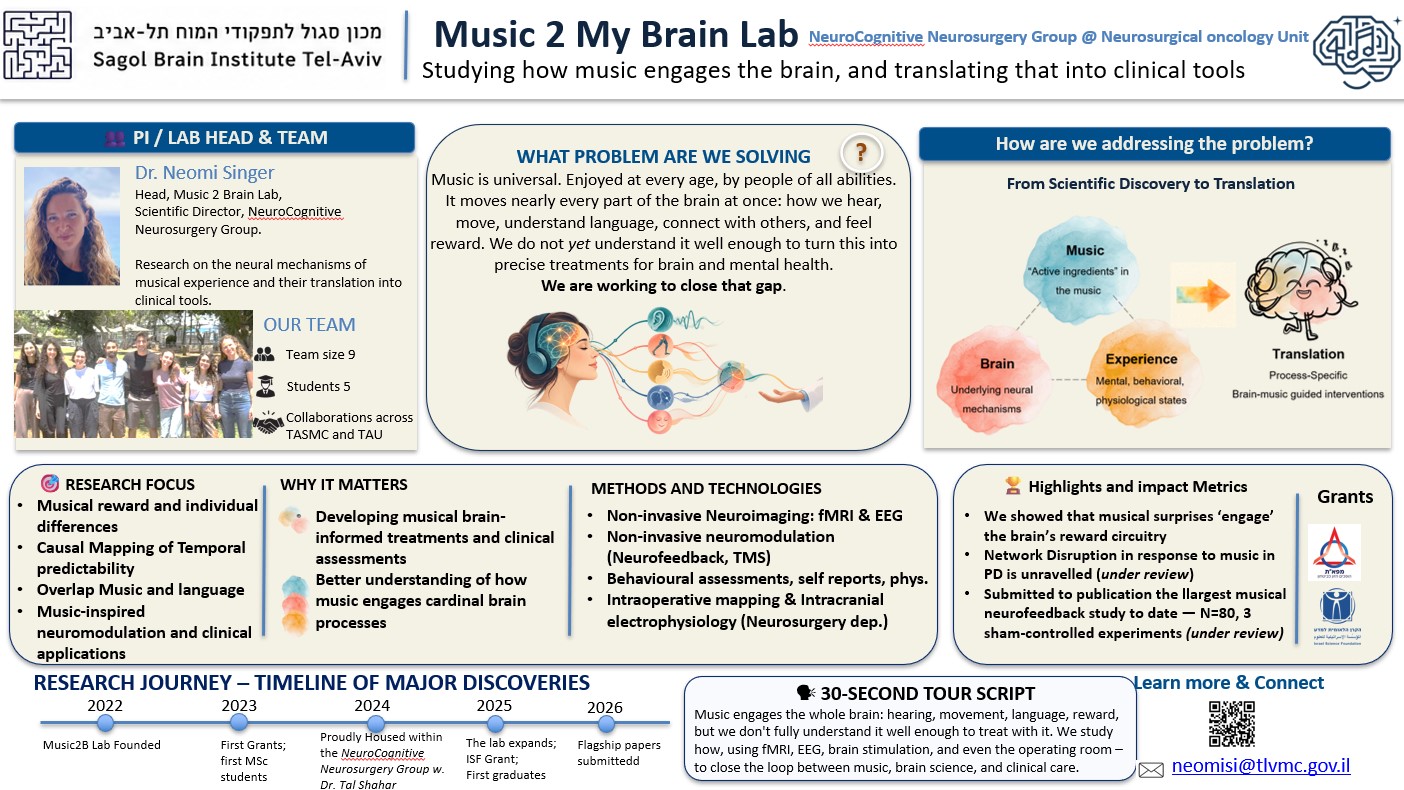
Music is a uniquely human phenomenon - universal across cultures and ages, accessible to people with diverse cognitive capacities, and deeply tied to who we are. It engages auditory, motor, language-related, limbic, and reward systems in synchrony, offering a rich window into how the brain works as an integrated whole. And it carries real-world weight: music is one of the most meaningful experiences of everyday life, with well-documented benefits for emotion, motivation, movement and well-being. Understanding the mechanisms behind those effects is what allows them to be translated into precise, evidence-based clinical tools.
The Music 2 My Brain Laboratory pursues this agenda along a translational arc, from basic neuroscience to clinical application and back. We study how music engages predictive, reward, sensorimotor, and language-related brain systems, combining fMRI, EEG, simultaneous EEG-fMRI, non-invasive brain stimulation (TMS), intraoperative neurophysiological monitoring, and behavioral and physiological probing of experience. Our research is organized around three interconnected programs: musical prediction and reward, neuromodulation and clinical translation, and peri-operative functional mapping.
Overview
M2BL is embedded within the Department of Neurosurgery, as part of the NeuroCognitive Neurosurgery Group in the Oncological Neurosurgical Unit, and collaborates with the Sagol Brain Institute at Tel Aviv Sourasky Medical Center (TASMC), with ties across TASMC and Tel Aviv University. This positioning lets us pursue questions that are difficult to address anywhere else: mechanistic neuroimaging studies, causal cortical mapping in the operating room, and clinically grounded translational projects, all within a single research program.
Our current research is organized around three interconnected programs - musical prediction and reward, neuromodulation and clinical translation, and peri-operative functional mapping - sharing a common conceptual core: music as a structured, modifiable stimulus capable of engaging multiple brain systems in parallel.
Our goal: close the loop between musical experience, underlying ‘neuromusical’ mechanism, and clinical translation.
Team
Neomi Singer, PhD
Principal Investigator, Music 2 My Brain Laboratory | Scientific Director, NeuroCognitive Neurosurgery Group
Department of Neurosurgery and Sagol Brain Institute, Tel Aviv Sourasky Medical Center
neomisi@tlvmc.gov.il | Google Scholar
- Asaf Hoory – M.S.c, 2024. School of Psychological Sciences | Tel Aviv University, co-mentor - Prof. Roy Mukamel, Dr. Tal Shahar
- Mia Eshkol – MSc, 2025. Sagol School of Neuroscience | Tel Aviv University; co-mentor - Prof. Yuval Nir, Dr. Tal Shahar
- Yuval Homsky – MSc, 2025. Sagol School of Neuroscience | Tel Aviv University; co-mentor - Prof. Aya Meltzer-Asscher, Dr. Tal Shahar
- Liron Noa David – Rom Scholar, Gray Faculty of Medical and Health Sciences | Tel Aviv University
- Yuval Koryto – M.S.c [Graduation: 2024]
- Neta Alon – S.c [Graduation: 2026]
- Reem Khatib - M.S.c [Graduation: 2026]
- NeuroCognitive Neurosurgery Group
- Prof. Talma Hendler - Sagol Brain Institute, TASMC & School of Psychological Sciences & Gray Faculty of Medical & Health Sciences, Tel-Aviv University
- Prof. Robert Zatorre - Montreal Neurological Institute, McGill University
- Prof. Yuval Nir - Sagol Brain Institute, TASMC & Gray Faculty of Medical & Health Sciences, Tel-Aviv University
- Prof. Roy Mukamel - School of Psychological Sciences, Tel-Aviv University
- Roni Granot - Department of Musicology, The Hebrew University of Jerusalem
- Noa Shopen, Emergency Department, TASMC
- Haggai Sharon, Pain Medicine, TASMC
- Rivi Tauman, Sieratzki-Sagol Institute for Sleep Medicine, TASMC
- Dr. Revital Shani-Hershkovich, Sieratzki-Sagol Institute for Sleep Medicine, TASMC
- Prof. Avner Tahler – Department of Neurology, TASMC & Gray Faculty of Medical & Health Sciences, Tel-Aviv University
- Prof. Anat Mirelman – Department of Neurology, TASMC & Gray Faculty of Medical & Health Sciences, Tel-Aviv University
Research Focus
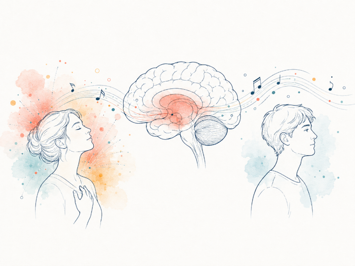
Why music is pleasurable, who responds most, and how individual differences in musical reward reveal the workings of the brain’s reward circuitry. We study the role of predictability in musical pleasure and hedonic capacity - asking why some people are moved to tears by a certain melody while others are not, and what that tells us about reward processing more broadly.
Or: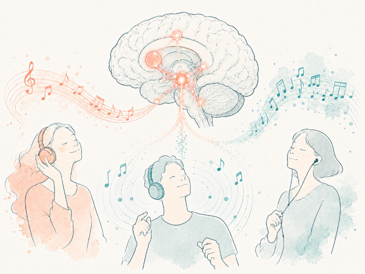
How the brain processes rhythmic structure and forms predictions about when the next note comes - and what this reveals about the predictive brain. We study how temporal expectations are built, updated, and rewarded, using music as a highly controlled and ecologically valid stimulus for predictive coding research.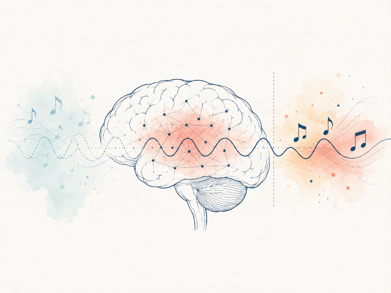
The neural overlap between music and language processing, and what mapping one tells us about the other. Music and language share rhythmic, syntactic, and predictive processing resources in the brain. We investigate this overlap both in basic cognitive neuroscience and in neurosurgical contexts, where understanding the boundaries between music- and language-responsive cortex has direct clinical relevance.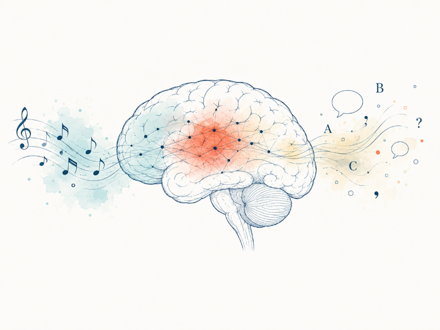
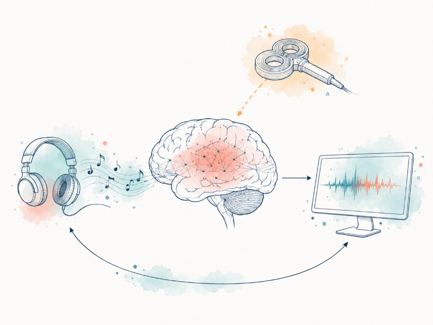
Developing music-informed tools for modulating brain activity, including the VS-EFP framework - a validated fMRI-informed EEG model of ventral striatum activation used in closed-loop neurofeedback. We also develop and test combined neuromodulation protocols, with the goal of building precise, non-invasive tools for regulating brain states in clinical populations.
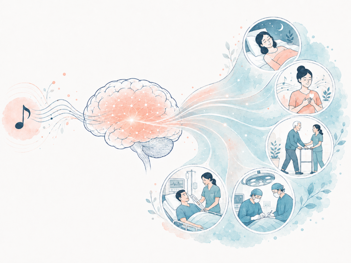
Applying music science across diverse clinical settings: stress, sleep; Parkinson’s disease; depression and anhedonia; and the operating room. This area includes both translational research grounded in the lab’s basic science findings and emerging collaborations with clinical departments at TASMC exploring music’s role in patient care.
Active Research
We are mapping cortical responses to musical rhythm in patients undergoing awake craniotomy, using intraoperative neurophysiological monitoring alongside pre-operative fMRI. This work characterizes where and how rhythm is represented in the human cortex and lays the groundwork for peri-operative paradigms that leverage the music-language overlap for functional mapping of related cognitive systems. Conducted in close collaboration with the NeuroCognitive Neurosurgery Group.
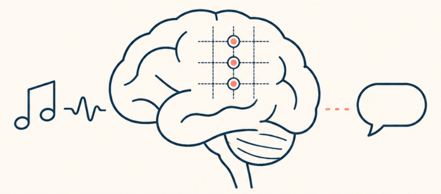
We study how the brain forms, updates, and is rewarded by musical predictions, and how individual differences in predictive capacity shape musical pleasure, preferences, and engagement. Using custom-designed musical stimuli, large-scale behavioral studies, and multimodal neuroimaging, we ask why music moves us and how prediction errors drive striatal reward signals.
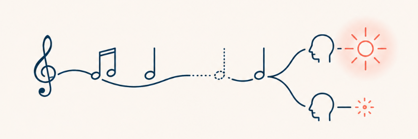
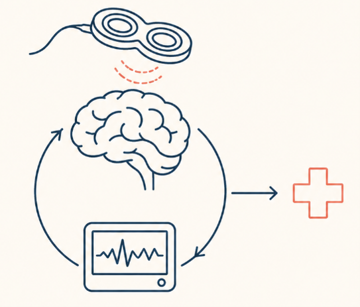
We develop and refine tools for modulating brain activity using music and music-informed neurofeedback, with the goal of translating mechanistic insights into clinical interventions. This includes the VS-EFP framework for self-regulation of ventral striatum activity, combined neuromodulation using TMS and EEG-fMRI neurofeedback, and emerging collaborations with clinical departments at TASMC.
Funding:




Join Us
Highlight Publications
Full list: Google Scholar (Singer N).
- Lubianiker N, Koren T, Djerasi M, Sirotkin M, Singer N, Jalon I, Lerner A, Sar-El R, Sharon H, Shahar M, Azulay-Debby H, Rolls A, Hendler T. Upregulation of reward mesolimbic activity and immune response to vaccination: a randomized controlled trial. Nat Med. 2026;32(2):572–581.
- Harding R, Singer N, Wall MB, Hendler T, Erritzoe D, Nutt D, Carhart-Harris R, Roseman L. Dissociable effects of psilocybin and escitalopram for depression on processing of musical surprises. Mol Psychiatry. 2025;30(7):3188–3196.
- Amital D, Gross R, Goldental N, Fruchter E, Yaron-Wachtel H, Tendler A, Stern Y, Deutsch L, Voigt JD, Hendler T, Harmelech T, Singer N’, Sharon H’. [co-senior] Reward System EEG-fMRI-Pattern Neurofeedback for Major Depressive Disorder with Anhedonia. Brain Sci. 2025;15(5):476.
- Siman-Tov T, Gordon CR, Sarig A, Lev Bar-Or K, Singer N, Granot RY, Hendler T. Social bonding and implicit learning may mediate the prediction-related hedonic response to music. Psychol Aesthet Creat Arts. doi:10.1037/aca0000751.
- Sayal A, Direito B, Sousa T, Singer N, Castelo-Branco M. Music in the loop: a systematic review of current neurofeedback methodologies using music. Front Neurosci. 2025;19:1515377.
- Gurevitch G, Lubianiker N, Markovits T, Singer N’, Hendler T’. [co-senior] Amygdala self-neuromodulation capacity as a window for process-related network recruitment. Philos Trans R Soc Lond B Biol Sci. 2024;379(1915):20240186.
- Singer N, Poker G, Dunsky-Moran N, Nemni S, Reznik Balter S, Doron M, Baker T, Dagher A, Zatorre RJ, Hendler T. Development and validation of an fMRI-informed EEG model of reward-related ventral striatum activation. 2023;276:120183.
- Singer N, Jacoby N, Hendler T, Granot R. Feeling the beat: Temporal predictability is associated with ongoing changes in music-induced pleasantness. J Cogn. 2023;6(1):34.
- Mas-Herrero E’, Singer N’, Ferreri L, McPhee M, Zatorre RJ, Ripollés P. [equal contribution] Music engagement is negatively correlated with depressive symptoms during the COVID-19 pandemic via reward-related mechanisms. Ann N Y Acad Sci. 2023;1519(1):186–198.
- Shany O’, Singer N’, Gold BP, Jacoby N, Tarrasch R, Hendler T, Granot R. [equal contribution] Surprise-related activation in the nucleus accumbens interacts with music-induced pleasantness. Soc Cogn Affect Neurosci. 2019;14(4):459–470.
- Ferreri L’, Singer N’, McPhee M, Ripollés P, Zatorre RJ, Mas-Herrero E. [equal contribution] Engagement in Music-Related Activities During the COVID-19 Pandemic as a Mirror of Individual Differences in Musical Reward and Coping Strategies. Front Psychol. 2021;12:673772.
- Singer N, Jacoby N, Lin T, Raz G, Shpigelman L, Gilam G, Granot RY, Hendler T. Common modulation of limbic network activation underlies musical emotions as they unfold. 2016;141:517–529.
Preprints
- Singer N, Rabinowitz A, Farres-Franch M, Koryto Y, Doron M, Dunsky N, Hamrani Y, Gurevitch Hendler T, Dagher A, Zatorre R. Music-to-My-Brain: Modulation of Reward System Activity via Musical Neurofeedback. 2026 May. doi:10.1101/2026.05.04.718856. Manuscript under review.
From the Press:
Israel, beWell magazine – הקול בראש
Israel, Paula and Leon Morning show -בדרך אל האושר – כיצד שירים יכולים לשפר את מצב הרוח שלנו?
Israel, Haarez – הבינה המלאכותית כבר יודעת לייצר את המוזיקה שאנחנו מדמיינים. האם בקרוב תקרא מחשבות?
פודקאסט: בלבולי מוח, רון קבונובסקי - פרק 9: ד״ר נעמי זינגר - מוזיקה והמוח
Israel, La’Isha – "מוזיקה פועלת במוח כמו סם טבעי"