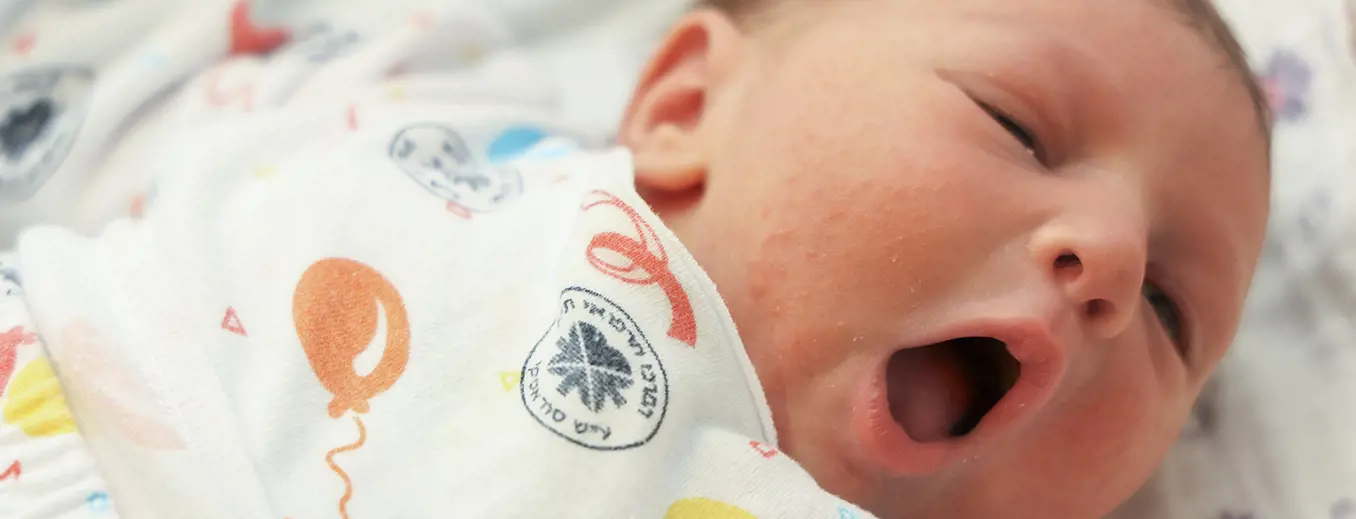
The Department of Neonatology at the Tel Aviv Sourasky Medical Center combines the Neonatal Intensive Care Unit (NICU) and the well baby nursery. Approximately 12,000 healthy babies are born and cared for in the Lis Maternity Hospital every year.
The Neonatal and Premature Infant Department provides newborns with the monitoring, care, and support they need during their first days of life and until discharge home. Approximately 10% of newborns require additional treatment beyond routine newborn care.
Each year, approximately 12,500 babies born at Lis Maternity and Women’s Hospital are cared for by the neonatal services at Tel Aviv Medical Center.
The department includes two main units: the Well Baby Nursery and the Neonatal Intensive Care Unit (NICU). A dedicated Neonatal Jaundice Clinic also operates within the department.
The NICU treats premature and newborn infants born at Lis, as well as babies transferred from hospitals in Israel and around the world for complex and specialized care. The unit provides advanced monitoring, respiratory support, diagnostic services, and specialized surgical care, including pediatric surgery, pediatric neurosurgery, and pediatric urology.
The Well Baby Nursery provides care for healthy full-term newborns until discharge. Each baby undergoes medical examinations, blood tests, and immunizations as required, while mothers receive guidance on newborn care, feeding, breastfeeding, and medical follow-up.
Team
Associated medical units
The Newborn Care Department treats thousands of newborns born at Lis Maternity & Women's Hospital every year, including healthy babies, premature infants and babies needing special medical care. From the first moments of life The infant is then placed under special admission observation for several hours and then transferred to the mother if she has chosen the rooming-in option, or placed in the nursery. Lis Hospital offers a range of rooming-in possibilities, from full rooming in, in which the baby can spend the entire day with its mother, or partial rooming-in, based on the mother's preferences. Baby-focused care Blood tests and treatments are performed, and immunizations are given according to the Ministry of Health's requirements. When necessary, other tests, such as special blood tests, x-rays, or ultrasounds, are conducted after pediatrician and parental medical counseling. The Neonatal Intensive Care Unit (NICU) provides care for premature and newborn infants born at Lis Maternity and Women’s Hospital, as well as babies transferred from hospitals in Israel and around the world for specialized treatments, including pediatric surgery, pediatric neurosurgery, and pediatric urology. The unit cares for premature infants born from 23 weeks of pregnancy, who may have immature respiratory and digestive systems. Treatment may include advanced respiratory support, intravenous nutrition followed by gradual enteral feeding, and continuous monitoring using advanced medical equipment. The Tongue-Tie Treatment and Research Center at Lis Maternity and Women’s Hospital combines breastfeeding support with tongue-tie release procedures. Infants undergo a breastfeeding assessment by a lactation consultant, followed by evaluation by a physician. The service is available to babies born at Lis who are referred by a lactation consultant, as well as babies referred after discharge or born at other hospitals and diagnosed in the community. Jaundice occurs when a yellow pigment called bilirubin accumulates in the body’s tissues. Bilirubin is naturally produced during the breakdown of hemoglobin and myoglobin and is normally processed and eliminated by the body. Physiological jaundice in newborns is very common. It usually appears on the second day after birth and peaks on the third or fourth day. In most babies, it resolves without treatment and does not cause harm. Treatment depends on the baby’s bilirubin level. In some cases, phototherapy (light therapy) is used for 1–3 days to help the body eliminate bilirubin. If bilirubin levels become very high and phototherapy is not effective, an exchange transfusion may be required. Some babies require continued monitoring after discharge. Newborns with elevated bilirubin levels may be referred to the Neonatal Jaundice Clinic, where bilirubin is measured through the skin or with a blood sample from the heel. The baby is then examined by a pediatrician, who reviews the results and determines whether further monitoring or treatment is needed.Newborn Care
Newborn care begins immediately after birth, with parent-baby bonding, optional breastfeeding, and an initial examination and evaluation.
Each newborn infant undergoes a complete physical examination by a pediatrician before discharge. Pediatricians are also on call 24 hours a day for any medical need that may arise.Neonatal Intensive Care Unit (NICU)
Tongue-Tie Treatment and Research Center
Neonatal Jaundice Clinic