Executive Vision: The Intersection of MRI Physics and Artificial Intelligence
Vision Statement
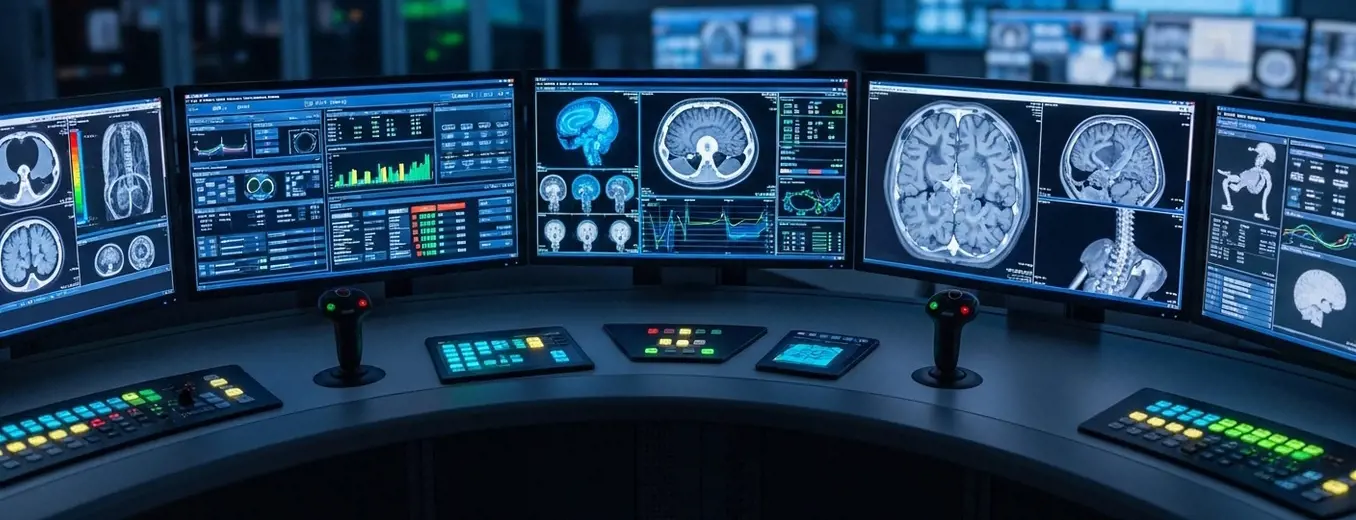
The Advanced Medical Imaging Research Lab (AMIR) engineers the future of diagnostic precision by bridging the gap between MRI physics and Artificial Intelligence. As a central hub of hospital research infrastructure, the lab translates fundamental physiological biomarkers into automated computational intelligence, catalyzing breakthroughs in personalized medicine across the lifespan.
The AMIR Lab thrives on a high-level leadership synergy that uniquely positions it at the forefront of medical communications and academic excellence. The lab leverages world-class expertise in quantitative MRI and tissue characterization, coupled with computational prowess by developing automated modeling, segmentation, and predictive analytics.
Key innovations developed in the Lab are directly translated to clinical service within Sagol Brain Institute, which includes several clinical applications: quantitative assessment of tumor size, assessing tumor response to therapy, evaluating changes in tissue metabolites in children, vascular pathology assessment and more.
Team (PI, Student, Researcher, Past Staff, Collaborators)
Leadership: Principal Investigators
The laboratory is built around a complementary leadership team that integrates expertise in quantitative MRI physics, artificial intelligence, and clinical translation, enabling the development of advanced imaging biomarkers and their implementation in routine patient care.
Principal Investigator


Team
Anna Levchakov, MSc - Electric Engineer - Laboratory Manager: Oversees the day-to-day operations of the AMIR Lab, coordinating research activities, project logistics, regulatory processes, and collaboration across multidisciplinary teams to ensure the successful execution of clinical and research studies.
Tuvia Ganot, BA, Radiographer – Senior MRI Technologist: A senior MRI technologist with extensive expertise in advanced clinical and research MRI acquisitions, responsible for implementing and optimizing specialized imaging protocols and supporting the translation of innovative MRI methodologies into clinical practice.
Shelly Gur, M.Sc, PhD candidate – Clinical Research Coordinator: Coordinates clinical research studies, patient recruitment, regulatory approvals, and study logistics, serving as a key liaison between investigators, clinical teams, and research participants to ensure the efficient conduct of clinical research.
Doctoral Candidates (PhD)
• Yael Herman Moshe
• Shahar Zachariah
• Aaron Olender
• Dana Schonberger*
• Sapir Fajerzstein*
• Yossi Nahmias
• Abeer Saeed
Master’s Candidates (MSc)
• Yuval Buchsweiler
• Mor Alon
• Eyal Hizmi
• Rotem Orad
• Neama Khalil
• Sean Zaretzky
Doctoral Candidates (PhD)
• Gilad Liberman
• Maya Weinstein
• Moran Artzi
• Efrat Kliper
• Dafi Link Sourani
• Oren Gery
• Neta-li Mor
• Netanel Avisdris
• Bosmat Yehuda
• Aviad Rabinowich
Master’s Candidates (MSc)
• Yosi Levy
• Eilon Gersten
• Ida Sivan
• Vered Kronfeld-Duenias
• Moran Arzi
• Maya Weinstein
• Reut Granot Halevy
• Guy Nadav
• Keren Rotker
• Dor Amran
• Shiran Halabi
• Ori Ben-Zvi
• Zeev Hananis
• Idan Brssler
• Shelly Gur
Collaborators
The AMIR Lab collaborates extensively with clinicians and researchers across multiple departments at TASMC, including Radiology, Neurology, Neurosurgery, Neuro-Oncology, Obstetrics and Gynecology, Pediatrics Neurology, and other clinical specialties. The laboratory also maintains close collaborations with investigators across Tel Aviv University as well as with leading academic and medical institutions in Israel and worldwide.
Key collaborators outside TASMC include Prof. Amit Bermano, Prof. Noam Ben-Eliezer and Dr. Or Perlman (Tel Aviv University), Prof Leo Joskowicz (The Hebrew University of Jerusalem), Prof. Elka Miller (Sick Kids Hospital in Toronto), Prof. Danny J. J. Wang (University of Southern California), together with numerous clinical and research partners in radiology, neurology, neurosurgery, obstetrics and gynecology, and oncology at Tel Aviv Sourasky Medical Center. These multidisciplinary collaborations foster innovation at the interface of MRI physics, artificial intelligence, biomedical engineering, and clinical medicine, accelerating the translation of advanced imaging technologies into clinical practice.
Research and collaborators
This collaboration advances the concept of virtual biopsy, leveraging advanced MRI analysis and deep learning techniques to non-invasively characterize central nervous system lesions. The group develops tools for differentiating between distinct pathologies, tumor types, and molecular profiles directly from imaging data, supporting accurate diagnosis and personalized treatment planning while reducing reliance on invasive procedures.
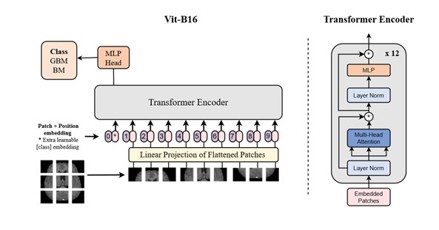
- Key Collaborators: Orna Aizenstein, Dr. O. Haim, Dr. Segev Gabay, Prof. Ido Strauss, Prof Assaf Tal, Prof. Jonathan Roth.
The collaboration focuses on the imaging-based assessment of treatment response in patients with brain tumors. Using advanced MRI techniques, including Dynamic Contrast-Enhanced (DCE) MRI, together with artificial intelligence methods, the group has developed tools that differentiate true tumor progression from treatment-related changes. These approaches improve clinical decision-making and have been approved for clinical use in Israel, including incorporation into the national health basket.
Key Collaborators: Orna Aizenstein, Prof. D.T. Blumenthal, Dr. F. Bokstein, Prof. Ido Strauss, Prof Assaf Tal, Dr. Lior Zach.
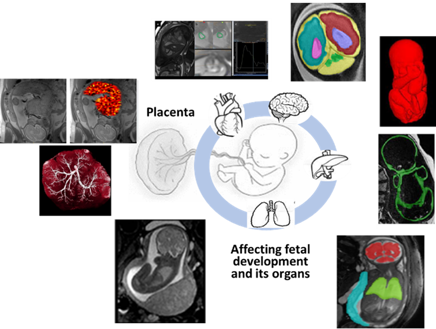
The AMIR Lab is internationally recognized for pioneering quantitative fetal and placental MRI and artificial intelligence to advance precision prenatal medicine. The group develops novel imaging biomarkers and automated analysis tools to non-invasively characterize fetal brain and body development, placental structure and function, and the maternal–placental–fetal unit.
Key innovations include quantitative assessment of fetal body composition, placental perfusion and function, and fetal brain development. These technologies improve the diagnosis and outcome prediction of pregnancies complicated by fetal growth restriction, congenital CMV infection, and genetic disorders affecting brain development. Current March of Dimes-funded studies investigate how maternal factors-including sleep, stress, nutrition, and physical activity—influence fetal development through the placenta.
Key Collaborators: Prof. Liat Ben-Sira, Prof. G. Malinger, Prof. Karina Krajden Haratz, Prof. Liran Hiersch, Prof. Riva Tauman.
In these studies we apply multimodal AI and deep learning approaches that integrate medical imaging with clinical data to improve prediction, risk stratification, and clinical decision support in musculoskeletal and oncologic diseases. For example, recent work demonstrated improved prediction of orthopedic management decisions by combining X-ray imaging with clinical variables in patients with metastatic bone disease.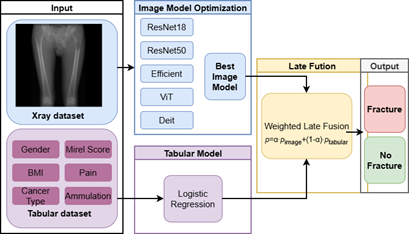
- Key Collaborator: Amir Sternheim, Prof. Zohar Yosibash
The AMIR Lab develops advanced quantitative MRI techniques and imaging biomarkers to improve the early diagnosis, characterization, and monitoring of neurodegenerative disorders. By integrating neuromelanin-sensitive MRI, quantitative susceptibility and iron imaging, Chemical Exchange Saturation Transfer (CEST), perfusion imaging, and artificial intelligence, the group investigates the biological mechanisms underlying Parkinson's disease, Alzheimer's disease, and related dementias. Current research focuses on identifying sensitive biomarkers of neurodegeneration, vascular dysfunction, and disease progression, with the goal of enabling earlier diagnosis, predicting clinical outcomes, and supporting precision medicine.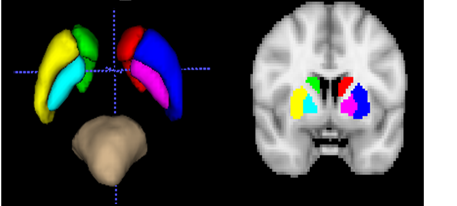
Key Collaborator: Prof. Anat Mirelman, Prof. Avner Thaler, Dr. Amgad Droby, Dr. Orna Aizenstein, Dr. Yair Wexler, Dr. Tamara Shinar, Prof. Nora Bregman, Dr. Or Perlman.
The AMIR Lab pioneers quantitative cerebrovascular imaging by integrating advanced MRI physics with artificial intelligence to characterize cerebral hemodynamics in health and disease. Combining TWIST, ASL, and other quantitative MRI techniques, the lab investigates cerebral blood flow, vascular permeability, collateral circulation, and tissue perfusion in Moyamoya disease, ischemic stroke, intracranial aneurysms, and related vascular disorders. The goal is to develop imaging biomarkers that enable precision diagnosis, predict cognitive outcomes, and guide personalized treatment.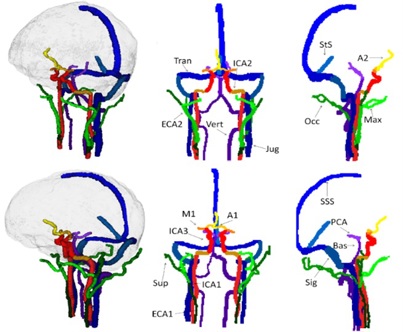
- Key Collaborator: Orna Aizenstein, Prof. Moran Housman, Dr. Shelly Shiran, Prof. Udi Sadeh Gonik, Prof. Liat Ben Sira, Prof. Yael Leitner, Dr. Ayelet Zerem.
Flagship Research Projects
PI
Prof. Dafna Ben Bashat & Dr. Moran Artzi
Technological Core (AI/MRI)
Multi-parametric analysis of DCE-MRI using quantitative signal analysis, machine learning, and deep learning
Clinical Objective
To quantitatively characterize MRI changes and accurately distinguish treatment-related changes from tumor recurrence.
Approved by the Israeli National Health Basket as a clinical decision-support tool.
PI
Prof. Dafna Ben Bashat
Technological Core (AI/MRI)
AI-based 3D reconstruction, multi-class segmentation, and advanced quantitative fetal MRI analysis
Clinical Objective
To provide automated quantitative assessment of fetal development and growth for improved prenatal evaluation.
Supported by the Israel Innovation Authority.
PI
Prof. Dafna Ben Bashat
Technological Core (AI/MRI)
Advanced diffusion MRI, high b-value diffusion-weighted imaging, and tractography
Clinical Objective
To identify accelerated white matter maturation and characterize brain–behavior relationships during early childhood in autism spectrum disorder.
This pioneering work was the first to demonstrate accelerated white matter maturation in autism and has subsequently been replicated by multiple independent international studies.
PI
Dr. Moran Artzi
Technological Core (AI/MRI)
Deep learning foundation models applied to conventional MRI.
Clinical Objective
To enable automated detection of spinal cord lesions and localization of spinal dural arteriovenous fistula (SDAVF) feeders, facilitating earlier diagnosis and treatment planning.
PI
Prof. Dafna Ben Bashat
Technological Core (AI/MRI)
Multi-parametric placental and fetal MRI, quantitative imaging biomarkers, AI-based image analysis, and advanced MRI quantification
Clinical Objective
To identify MRI biomarkers of placental dysfunction associated with maternal obstructive sleep apnea and to improve the assessment and prediction of adverse fetal growth and pregnancy outcomes.
Supported by the March of Dimes (MOD).
Signature Contributions
1. MRI-based spectral analysis of fetal brain gyrification in typical development and in lissencephaly and polymicrogyria (2026).
2. Automatic detection of spinal pathologies based on MRI scans, (2026).
3. Enhancing Brain Tumor Classification and Generalization Using DDPM-Generated MRI, Mutual Information and Ensemble (2026).
4. Fetal body composition reference charts and sexual dimorphism using magnetic resonance imaging (2024).
5. Brain Metabolite Differences in Fetuses With Cytomegalovirus Infection: A Magnetic Resonance Spectroscopy Study (2024).
6. Fetal Brain Tissue Annotation and Segmentation Challenge Results. Medical Image Analysis (2023).
7. Model free dynamic contrast enhanced MRI analysis: differentiation between active tumor and necrotic tissue in patients with glioblastoma (2023).
8. Neuromelanin and T2* MRI for assessment of Genetically At-Risk, Prodromal and Symptomatic Parkinson’s Disease (2022).
9. Virtual biopsy using MRI radiomics for prediction of BRAF status in melanoma brain metastases (2020).
10. Differentiation between glioblastoma, brain metastasis and subtypes using radiomics analysis (2019).
Funding & Patents
The AMIR Lab's research is supported by competitive funding from the Israel Science Foundation (ISF), the Israel Innovation Authority (IIA), the March of Dimes, the James S. McDonnell Foundation, the Israel Innovation Authority, and numerous additional national and international funding agencies. The laboratory has generated 11 patents, including innovations in fetal and placental imaging, pregnancy management, accelerated MRI acquisition and reconstruction, and high-resolution dynamic image fusion, reflecting its strong commitment to technological innovation and clinical translation.