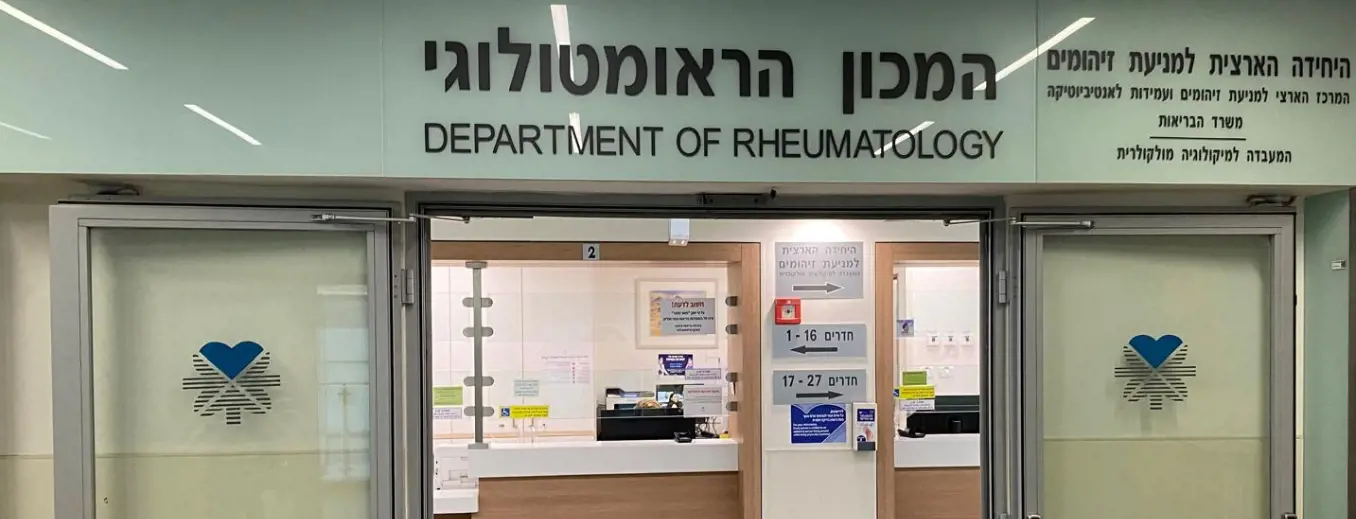
The Institute of Rheumatology at Tel Aviv Medical Center (Ichilov) is Israel’s largest and leading rheumatology center in terms of both staff and patient volume. The institute provides advanced diagnosis and treatment for a wide range of rheumatic diseases, combining medical expertise, personalized care, and innovative therapies.
The institute serves patients from across Israel and abroad and provides rheumatology consultations to all hospital departments around the clock. Its services include outpatient clinics, a day hospitalization unit, and a research laboratory.
Services and Treatments
-
Telemedicine: Online video consultations for existing patients and initial assessments for new patients, excluding fibromyalgia.
-
General Rheumatology Clinic: Diagnosis and treatment of inflammatory and degenerative diseases affecting the joints, spine, and muscles, as well as autoimmune diseases and vasculitis.
-
Multidisciplinary Clinics: Specialized care for complex conditions, including psoriasis, psoriatic arthritis, and lupus, in collaboration with experts in nephrology, neurology, ophthalmology, pulmonology, high-risk pregnancy, hematology, and gastroenterology.
-
Joint Procedures: Diagnostic and therapeutic joint aspirations, synovial fluid analysis, and ultrasound-guided injections, including radioactive yttrium.
-
Day Hospitalization Unit: Biological therapies, intravenous medications, immunoglobulin infusions, complex joint injections, and multidisciplinary diagnostic evaluations.
-
Advanced Diagnostics: Musculoskeletal ultrasound, rapid diagnosis of giant cell arteritis (GCA), and nailfold video capillaroscopy.
-
Psychological Support: Fibromyalgia support groups, psychological assessments, short-term therapy, and neuropsychological evaluations.
The institute offers advanced diagnostic technologies, including ultrasound, MRI, and other imaging methods. Its experienced medical team provides access to approved biological treatments and innovative therapies.
As a leading research center, the institute conducts clinical studies that provide patients with opportunities to access emerging medications and treatments, including advanced drug therapies and cellular therapies.
Institute Clinics
The Early Arthritis Diagnosis Service is designed to diagnose patients with inflammatory joint diseases, such as rheumatoid arthritis (characterized by joint pain, stiffness, and swelling, particularly in the hands) or ankylosing spondylitis, which is characterized by inflammatory back pain that occurs mainly at rest and improves with physical activity.
The service was established in recognition of the importance of early diagnosis of inflammatory arthritis and the fact that early treatment improves the chances and speed of recovery. Conversely, delaying the initiation of medication, even by a few months after the onset of symptoms, may lead to greater suffering and more severe joint damage.
The service provides initial diagnostic evaluation for patients with suspected inflammatory arthritis, particularly those experiencing pain and/or swelling in various joints, including the spine, for several weeks to months, who have not yet been evaluated at a rheumatology clinic.
Temporal arteritis, also known as Giant Cell Arteritis (GCA), is a systemic inflammatory blood vessel disease (vasculitis) that affects the large blood vessels of the head (cranial arteries), neck, and chest.
A visit to the Rapid Diagnosis Clinic for Giant Cell Arteritis includes:
-
Evaluation by a rheumatology specialist.
-
Ultrasound examination of the temporal and axillary arteries.
-
Coordination of a biopsy, if necessary, and treatment recommendations.
Patients with diseases affecting the joints are evaluated through a medical history review and physical examination. In certain cases, when the diagnosis or level of disease activity remains uncertain, ultrasound imaging can be used to provide clear and detailed visualization of the joints and surrounding structures, including tendons, ligaments, tendon attachments, blood vessels, and nerves.
The Institute provides ultrasound assessments of disease activity in the joints and associated structures.
A high-risk pregnancy is a pregnancy in which maternal or fetal conditions require closer monitoring and more specialized care than a typical pregnancy, provided by physicians with expertise in high-risk pregnancies.
The combined High-Risk Pregnancy and Rheumatology Clinic provides care for women with complex medical conditions, including heart disease, respiratory and gastrointestinal disorders, diabetes, hypertension, and rheumatological diseases such as systemic lupus erythematosus (SLE), antiphospholipid antibody syndrome (APLA), and other connective tissue diseases.
In addition, certain conditions that develop during pregnancy may increase the risk of complications. These include bleeding caused by placenta previa, placental abruption, gestational diabetes, pregnancy-related hypertension, premature rupture of membranes, post-term pregnancy, trauma during pregnancy, and other conditions.
The clinic aims to provide care for women before conception and throughout pregnancy, tailoring treatment to each patient's needs in an effort to reduce the risk of pregnancy complications.
Treatment and monitoring of high-risk pregnancies are individualized according to the mother's medical condition and the condition of the fetus, including examinations and monitoring as needed.
When there is a risk to the mother or fetus, hospitalization in the Antenatal Inpatient Unit may be required. Following discharge, care continues through the high-risk pregnancy clinics.
The clinic works in close collaboration with the Delivery Room, Obstetric Emergency Department, Ultrasound Institute, Genetics Institute, and Neonatal and Premature Infant Department.
Systemic lupus erythematosus (SLE), commonly known as lupus, affects approximately 1 in 2,000 people. It is nine times more common among women of childbearing age but may also affect men and children.
The Lupus Clinic at Ichilov's Rheumatology Institute treats patients aged 16 and older who have been diagnosed with lupus or are suspected of having the disease.
The cause of lupus is unknown. It is an autoimmune disease in which the immune system may attack various organs and systems in the body. As a result, the manifestations of the disease vary from patient to patient and may also change over time in the same patient.
Diagnosis is based on a combination of symptoms and laboratory findings. Monitoring and treatment are also complex and individualized due to possible changes in disease activity, the effects of pregnancy on the disease, antiphospholipid syndrome, and the use of immunosuppressive medications, chemotherapy, and other treatments.
As a multisystem disease, lupus may affect various organs and systems, and managing its different manifestations sometimes requires a multidisciplinary approach involving rheumatologists and specialists from other medical fields.
For this purpose, combined clinics have been established, providing joint consultation and treatment by two specialists: a rheumatologist and a physician specializing in another relevant field.
The Combined Clinic for Inflammatory Eye and Joint Diseases is a collaborative initiative of the Ophthalmology Department and the Rheumatology Institute.
Inflammatory eye diseases may be the first sign of an underlying systemic disease or may occur alongside other conditions, such as joint diseases. A significant number of autoimmune inflammatory diseases are associated with an increased incidence of both eye and joint involvement.
These diseases may severely affect patients' quality of life and even impair their vision. The time between disease onset, diagnosis, and initiation of appropriate treatment is critical in determining patients' long-term functional outcomes and visual prognosis.
Because these are multisystem diseases, their management requires a comprehensive multidisciplinary approach that addresses their diverse manifestations.
Accordingly, the clinic provides a multidisciplinary diagnostic and treatment program delivered by specialists in ophthalmology, rheumatology, and internal medicine.
The clinic provides care for patients with:
-
Rheumatoid arthritis
-
Sjögren's syndrome (dryness syndrome)
-
Systemic lupus erythematosus (SLE)
-
Spondyloarthropathies, including:
-
Ankylosing spondylitis
-
Psoriatic arthritis
-
Reactive arthritis
-
Arthritis associated with inflammatory bowel diseases
-
-
Behçet's disease
-
Sarcoidosis
-
Vasculitic diseases (inflammation of blood vessels), such as Wegener's granulomatosis and polyarteritis nodosa
-
Other conditions requiring a comprehensive evaluation of inflammatory eye diseases
Patients are evaluated jointly by ophthalmologists and rheumatologists. During the consultation, the specialists discuss the patient's condition, plan the necessary diagnostic evaluation, assess disease activity, and determine the appropriate treatment approach.
Successful treatment depends on the comprehensive care provided by the clinic's multidisciplinary team, together with the active involvement and full cooperation of the referring community physician.
Autoinflammatory syndromes are a group of inflammatory diseases affecting various body systems. Some are common, while others are rare, and certain conditions have a defined genetic basis. One of the best-known diseases in this group is Familial Mediterranean Fever (FMF).
These syndromes should be suspected when multisystem symptoms occur, such as recurrent fever, skin rashes, joint and muscle pain, gastrointestinal or kidney involvement, particularly at a young age or when there is a similar family history.
Diagnosis is based on personal and family medical history, physical examination, laboratory tests, imaging studies, and genetic testing.
Diagnosis and treatment are provided at Ichilov's Rheumatology Institute by a multidisciplinary team of specialists in rheumatology, allergy, and clinical immunology, aiming to establish an accurate diagnosis and develop a personalized treatment plan.
The Rheumatology Institute conducts extensive clinical research activities. All physicians in the department have completed Good Clinical Practice (GCP) training.
Areas of Research:
-
International clinical trials investigating the efficacy and safety of biological therapies
-
Psoriatic arthritis
-
Vaccination in autoimmune diseases
-
Tuberculosis and rheumatology
-
Systemic lupus erythematosus (SLE) research
-
Fibromyalgia syndrome research
The Raynaud's Clinic is a specialized clinic for patients with Raynaud's phenomenon, providing evaluation, early diagnosis, and follow-up for patients with secondary Raynaud's phenomenon associated with systemic connective tissue diseases.
Raynaud's phenomenon is characterized by changes in the color of the fingers, toes, nose, and ears (white, blue, and red) caused by the constriction of small blood vessels in response to cold, emotional stress, or other triggers. In severe cases, ulcers may develop on the fingertips.
Raynaud's phenomenon is classified into two types:
- Primary Raynaud's Phenomenon: Usually occurs in young women aged 20–40, often with a family history. It is not associated with an autoimmune disease, does not typically progress over time, and generally does not cause damage to the fingers.
- Secondary Raynaud's Phenomenon: May also develop at older ages and in men. It is associated with autoimmune diseases such as scleroderma, lupus, and other connective tissue diseases. In these cases, Raynaud's phenomenon may be a manifestation of the underlying disease and may progress without appropriate treatment.
Early diagnosis is based on:
-
A detailed medical history and examination by a specialist
-
Blood tests, including specific antibody testing
-
Nailfold Capillaroscopy: A noninvasive, painless examination of the small blood vessels around the fingernails, used to assess capillary structure and blood flow.
The Myositis Clinic operates within the Rheumatology Institute and specializes in the diagnosis and treatment of patients with suspected inflammatory muscle diseases.
The clinic provides diagnostic evaluation and treatment for patients with the following conditions or findings:
-
Muscle weakness
-
Elevated muscle enzyme levels
-
Myopathic changes on electromyography (EMG)
-
Suspected inflammatory muscle changes on MRI
-
Skin rashes characteristic of dermatomyositis
-
Interstitial lung disease accompanied by other signs of systemic disease, including arthritis, skin rash, or a positive antinuclear antibody (ANA) test
The Rheumatology Institute at Tel Aviv Sourasky Medical Center (Ichilov) performs a myositis antibody panel to detect most myositis-specific antibodies.
If necessary, patients are referred for a muscle biopsy.
Following diagnosis, patients receive ongoing treatment and close rheumatological follow-up.
Scleroderma (systemic sclerosis) is a chronic, multisystem autoimmune disease caused by abnormal immune system activity. In this condition, the immune system mistakenly attacks the body's own tissues, leading to excessive collagen production and hardening (fibrosis) of the skin and internal organs. The exact cause of the disease is not fully understood.
As a multisystem disease, scleroderma may affect various organs, including the skin, lungs, heart, and gastrointestinal tract. Therefore, treatment sometimes requires a multidisciplinary approach involving rheumatologists and specialists in pulmonology, cardiology, gastroenterology, nephrology, and other fields.
The Rheumatology Institute operates combined clinics that provide joint consultation and treatment by specialists from different medical disciplines.
The Scleroderma Clinic treats patients aged 16 and older who have been diagnosed with systemic sclerosis or are suspected of having the disease. The peak age of onset is between 50 and 60 years.
Diagnosis is based on a combination of clinical symptoms, laboratory findings, capillaroscopy to examine the small blood vessels in the fingers, and additional imaging studies as needed.
Various treatments are available to address the different forms of organ involvement. In recent years, innovative therapies have been introduced that help slow disease progression, and many additional medications are currently under development.
The POAM Center provides care for patients with skin psoriasis and psoriatic arthritis, an inflammatory joint disease that may develop in up to 20% of patients with psoriasis.
Psoriatic arthritis can present in various forms, ranging from mild disease affecting only a few joints to severe involvement of multiple joints, potentially leading to disability.
Common symptoms include pain and swelling in different joints, nighttime pain, and morning stiffness. In some cases, the disease also affects the pelvic joints and the spine, causing chronic back pain.
Diagnosis is based on clinical findings and, in some cases, characteristic changes identified through imaging studies.
Approximately 20% of patients with psoriasis may develop psoriatic arthritis. Treatment options for psoriatic arthritis have improved significantly over the past decade, and early diagnosis and treatment can substantially improve the course of the disease.
The POAM Center for Skin and Joint Psoriasis provides comprehensive, multidisciplinary care combining advanced medications, including biological therapies, with psychological assessment and support and nutritional guidance.
The Center's team includes specialists in dermatology, rheumatology, and internal medicine, as well as a psychologist and a dietitian. Together, they develop personalized treatment plans addressing all aspects of the disease.
The Rheumatology Day Care Unit provides prolonged or complex treatments for patients with rheumatological diseases without the need for inpatient hospitalization.
Patients with rheumatic diseases sometimes require complex, multidisciplinary diagnostic evaluations, as well as infusions of biological therapies and other medications. In most cases, these evaluations and treatments can be provided in a day care setting, without the need for extended hospitalization.
In addition, the Unit participates in numerous multicenter clinical trials requiring the administration of infusions or injections in a day care setting.
The Unit has 10 treatment beds.
The clinic provides care for patients with both inflammatory arthritis and diseases affecting the gastrointestinal tract and liver, particularly inflammatory bowel diseases (IBD).
Inflammatory bowel diseases primarily include Crohn's disease and ulcerative colitis. In addition to gastrointestinal symptoms, these conditions may cause various manifestations outside the digestive system, affecting the joints, skin, eyes, and other organs.
Nearly half of patients with inflammatory bowel disease also experience arthritis, which may present as pain and swelling in various joints or chronic back pain, along with a range of skin manifestations and laboratory abnormalities.
Diagnosis is based on clinical findings and imaging studies when necessary. The combined clinic aims to provide professional, effective, multidisciplinary care for patients with these complex conditions.
The clinic's team includes specialists in gastroenterology and liver diseases, rheumatology, and internal medicine, as well as psychologists and dietitians. This multidisciplinary team provides comprehensive care addressing all aspects of the disease.
Clinic Services:
- Multidisciplinary Diagnosis: Each patient is evaluated by both a gastroenterologist and a rheumatologist. A joint assessment and multidisciplinary discussion are conducted to determine the appropriate diagnostic evaluation and treatment plan.
- Personalized Medication Management: In recent years, significant advances have been made in medications for inflammatory bowel diseases and inflammatory arthritis. The combined clinic enables more precise selection of medication for each patient.
- Psychological Assessment and Treatment: Many patients with chronic diseases experience associated emotional and psychological difficulties. When necessary, patients are referred to a psychologist specializing in the psychological challenges associated with complex chronic diseases.
- Nutritional Assessment: Provided through the nutritional counseling services of the Inflammatory Bowel Disease Unit.
The Multidisciplinary Rheumatology and Hematology Clinic provides care for patients with rheumatological diseases and hematological disorders affecting blood coagulation. The clinic offers comprehensive evaluation, diagnosis, and treatment under one roof.
The clinic aims to diagnose, treat, and monitor patients with complex medical conditions, including:
-
Rheumatological diseases accompanied by hematological coagulation disorders.
-
Antiphospholipid syndrome (APLA).
-
Rheumatological diseases accompanied by low platelet counts (thrombocytopenia).
-
Women of childbearing age with coagulation disorders who are planning pregnancy, or women who have experienced pregnancy complications associated with coagulation disorders.
The Combined Rheumatology and Pulmonology Clinic provides care for patients with lung involvement associated with rheumatic diseases.
The clinic treats patients with conditions such as:
-
Scleroderma
-
Myositis
-
Lupus
-
Dermatomyositis
-
Rheumatoid arthritis
-
Other rheumatic diseases involving the lungs.