Our Vision
The Immuno-Hepatobiliary and Transplantation (I-HPB) Laboratory is dedicated to advancing the understanding of how immune responses and microbial signals shape liver health and disease. Our vision is to transform the management of hepatobiliary cancers, liver regeneration, and transplantation by uncovering the fundamental mechanisms governing immune–bacterial interactions within the liver microenvironment.
The liver continuously receives microbial products and extracellular vesicles from the gut, creating a unique immunological ecosystem that influences tissue repair, inflammation, tumor progression, and transplant outcomes. We believe that these host–microbial interactions represent a previously underexplored therapeutic frontier. Through multidisciplinary research, we seek to define how bacterial DNA, microbial extracellular vesicles, metabolites, and immune signaling pathways regulate liver regeneration after surgery, the establishment of metastatic niches, and immune tolerance following transplantation.
Our laboratory integrates clinical research with cutting-edge experimental models, including advanced murine systems, human liver tissues, ex vivo organ perfusion, molecular biology, high-dimensional immunophenotyping, and multi-omics technologies. By combining fundamental immunology with translational research, we aim to identify novel biomarkers for patient stratification and develop innovative microbiome- and immune-based therapeutic strategies that improve surgical and oncological outcomes.
We are committed to bridging discoveries from the laboratory to the clinic through close collaboration among surgeons, immunologists, microbiologists, bioinformaticians, and clinician-scientists. Our ultimate goal is to establish precision immunomodulatory approaches that enhance liver regeneration, prevent postoperative cancer recurrence, improve transplantation success, and ultimately redefine perioperative care for patients with hepatobiliary diseases.
Through scientific excellence, innovation, and collaboration, the I-HPB Laboratory strives to become an international leader in the emerging field of immune–bacterial interactions in liver surgery and transplantation, translating fundamental biological discoveries into meaningful improvements in patient care.
Primary Investigators
Nir Lubezky
Shmuel Jaffe Cohen
About Our Lab
The Immuno-Hepatobiliary and Transplantation (I-HPB) Laboratory investigates the immune mechanisms that determine liver regeneration, postoperative cancer recurrence, and transplantation outcomes. Our research centers on the emerging concept that the liver is continuously shaped by microbial signals originating from the gut and that these signals profoundly influence local immune responses following surgical injury.
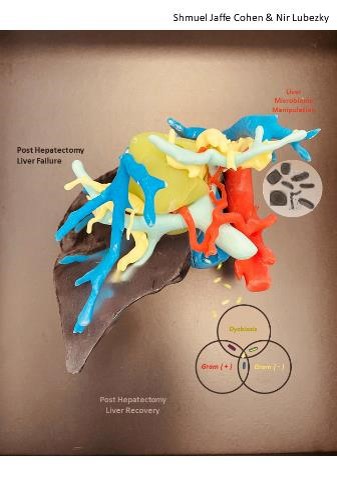
A major focus of our laboratory is understanding how probiotics and gut-derived microbial products modulate the hepatic immune microenvironment after liver surgery. While probiotics are widely regarded as beneficial and have been shown to reduce postoperative infections, our work demonstrates that they may also induce unexpected immunological consequences during the immediate postoperative period. We have identified a previously unrecognized mechanism whereby probiotic-derived signals promote T-cell anergy within the regenerating liver, suppressing anti-tumor immune surveillance at a critical window following hepatectomy.
Our studies indicate that this immune tolerance is associated with increased expression of the immunoregulatory cytokines interleukin-10 (IL-10) and transforming growth factor-β (TGF-β), leading to impaired activation, migration, and effector function of hepatic T lymphocytes. We hypothesize that this transient immunosuppressive state contributes to the formation of a surgery-induced metastatic niche, facilitating the engraftment and growth of circulating colorectal cancer cells in the regenerating liver. Understanding the molecular pathways responsible for postoperative T-cell dysfunction may reveal novel therapeutic opportunities to restore anti-tumor immunity without compromising liver regeneration.
Beyond probiotics, our laboratory studies the biological roles of bacterial DNA, microbial extracellular vesicles, lipopolysaccharide (LPS), lipoteichoic acid (LTA), and other microbial-associated molecular patterns in regulating hepatic immune responses. We combine murine models of liver regeneration and colorectal liver metastasis with analyses of human liver specimens, ex vivo liver perfusion systems, high-dimensional immune profiling, microbial sequencing, and multi-omics technologies to dissect these complex host–microbe interactions.
Our long-term goal is to translate these discoveries into **precision immunotherapies** that selectively modulate postoperative liver immunity. By targeting pathways such as IL-10, TGF-β, and T-cell exhaustion or anergy, we aim to prevent early metastatic recurrence, improve liver regeneration, and enhance outcomes following hepatobiliary surgery and liver transplantation. Ultimately, our vision is to establish immune–microbial modulation as a new therapeutic paradigm in surgical oncology and transplantation medicine.
Publications
- Cohen SJ, Meyerovich G, Blank S, Ovdat E, Graubardt N & Lubezky N. Liver microbial DNA signatures and extracellular vesicle epitopes as predictors of post-hepatectomy liver failure. iScience (2025). https://doi.org/10.1016/j.isci.2025.113618
- Cohen SJ, Meyerovich G, Blank S, Ovdat E, Loewenstein S, Kania-Almog J, Cohen M, Lahat G, Klausner JM & Lubezky N. Microbiota transfer following liver surgery involves microbial extracellular vesicle migration that affects liver immunity. Hepatol. Commun. 7, e0164 (2023). https://doi.org/10.1097/HC9.0000000000000164
- Cohen SJ, Papoulas M, Graubardt N, Ovdat E, Loewenstein S, Kania-Almog J, Pasmanik-Chor M, Brazowski E, Cagnano E, Nachmany I, Lahat G, Klausner JM & Lubezky N. Micro-RNA expression patterns predict metastatic spread in solid pseudopapillary neoplasms of the pancreas. Front. Oncol. 10, 328 (2020). https://doi.org/10.3389/fonc.2020.00328