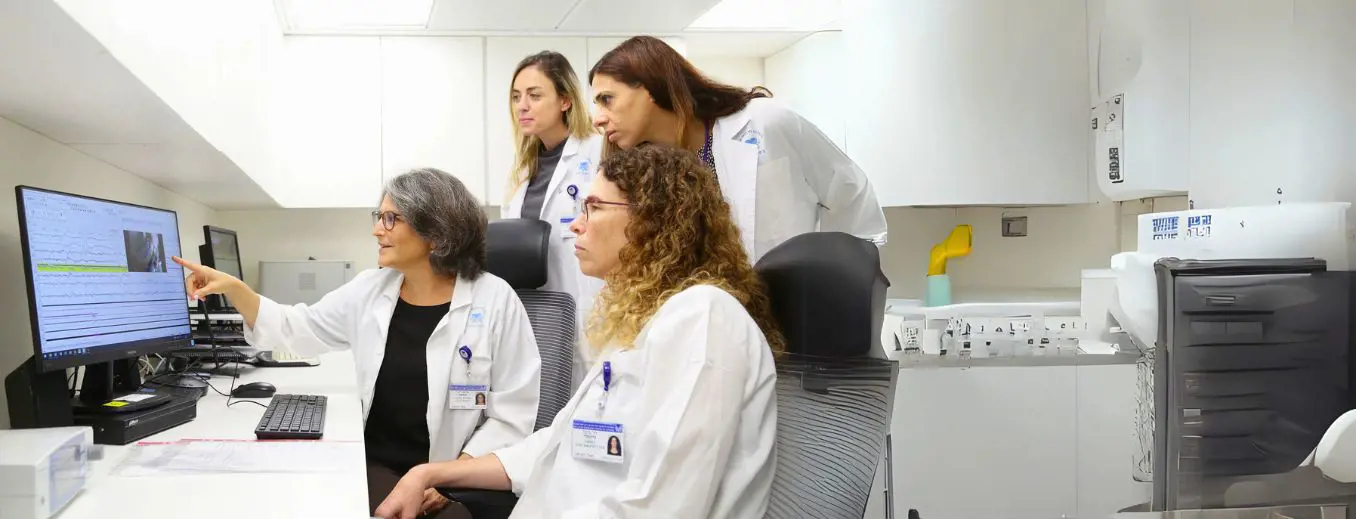
The Sieratzki-Sagol Institute for Sleep Medicine at the Tel Aviv Medical Center diagnoses and treats all sleep disorders in adults, infants, and children.
The Sagol-Sharetzky Institute for Sleep Medicine at Tel Aviv Medical Center specializes in the diagnosis and treatment of all sleep disorders in adults, infants, and children.
The Institute's staff includes sleep medicine physicians who completed specialized fellowships in sleep medicine in the United States and Canada, psychologists, therapists, and day and night technicians who have undergone structured training in the diagnosis and treatment of sleep disorders in adults and children.
The advanced Sleep Institute at Ichilov, inaugurated in May 2021, is the first of its kind in Israel. It includes sleep medicine clinics, sleep laboratories, a behavioral sleep disorders treatment unit, and research laboratories, with clinical and research teams working together under one roof.
The Institute provides sleep medicine services for adults and children aged 0–18, including overnight sleep studies, daytime sleepiness assessments, home sleep studies, sleep-wake pattern monitoring, and CPAP device adjustment. The staff works closely with the hospital's adult and pediatric EEG clinics and Neurology Division.
What Conditions Do We Treat?
Adults:
-
Sleep difficulties, including difficulty falling asleep, nighttime awakenings, early morning awakening, insufficient or unrefreshing sleep, sleep-related worries, and difficulty reducing sleep medications.
-
Abnormal or unwanted sleep behaviors and excessive movement during sleep, including excessive activity, falling out of bed, sleepwalking, and night terrors.
-
Periodic limb movements during sleep.
-
Restless legs syndrome.
-
Snoring, heavy breathing, and sleep apnea.
-
Daytime sleepiness and unrefreshing sleep.
-
Wakefulness and vigilance testing for drivers.
-
Nocturnal penile erection assessments.
Children:
-
Difficulty falling asleep and nighttime awakenings.
-
Abnormal or unwanted sleep behaviors, including sleepwalking, night terrors, and rhythmic movements at sleep onset.
-
Periodic limb movements during sleep.
-
Restless legs syndrome.
-
Snoring, heavy breathing, and increased respiratory effort during sleep.
-
Daytime sleepiness and difficulty waking up.
Examinations and Treatments at the Institute
Sleep studies are performed in the laboratory according to the diagnosis and recommendations of a sleep medicine specialist. During the examination, sensors monitor various parameters related to sleep, breathing, and movement, while video recording takes place throughout the night. The examination ends the following morning, and patients may be accompanied by a family member or friend.
Patients wear a wristwatch-like monitoring device for one to two weeks, according to the sleep physician's instructions. The examination helps assess sleep-wake patterns, diagnose sleep phase disorders, and evaluate sleep onset difficulties, nighttime awakenings, and sleep duration.
For adults with suspected obstructive sleep apnea, a home sleep study may be recommended. The sleep physician determines whether the examination should be performed at home or in the laboratory. For home testing, patients receive a portable breathing monitor to use overnight.
Continuous Positive Airway Pressure (CPAP) therapy is used to treat moderate to severe obstructive sleep apnea. The device delivers pressurized air through a fitted mask to help maintain an open airway during sleep. Patients receive instructions on using the device at home, with ongoing support from the Institute's staff throughout the adjustment process.
The Institute offers cognitive behavioral therapy for insomnia, recommended as a first-line treatment for sleep difficulties. The program includes five weekly sessions focusing on strategies to improve sleep onset, reduce nighttime awakenings, and promote mental and physical relaxation. The workshop is intended for patients who have undergone evaluation by a sleep physician and have had other sleep disorders ruled out.
Cognitive Behavioral Therapy for Nightmares (CBT-Nightmares) is a brief, focused treatment designed for individuals experiencing chronic nightmares and sleep difficulties. This evidence-based treatment has been shown to be effective in reducing the frequency, severity, and intensity of nightmares, including trauma-related nightmares.
The treatment is suitable for individuals who experience recurrent nightmares accompanied by negative emotions, causing them to awaken from sleep and remaining in their memory after waking.
An examination to assess nocturnal penile erections.
The examination is performed in the sleep laboratory and is designed to assess erectile function during sleep. Physiologically, healthy men experience several spontaneous erections during REM sleep that are not dependent on sexual stimulation. This examination measures the occurrence, frequency, and quality of nocturnal erections, helping to distinguish between physiological and psychological causes of erectile dysfunction.
A test to assess the ability to remain awake, including wakefulness evaluations for drivers.
The test is performed to objectively assess daytime sleepiness and the tendency to fall asleep. It takes place during the day, following a week of monitoring sleep patterns and sleep duration at home using actigraphy, and an overnight sleep study in the laboratory.
The daytime test includes several opportunities to sleep at regular intervals. During each session, the time it takes to fall asleep and sleep characteristics are measured.
The test is used as part of the evaluation of excessive daytime sleepiness and sleep disorders such as narcolepsy.